Summary:
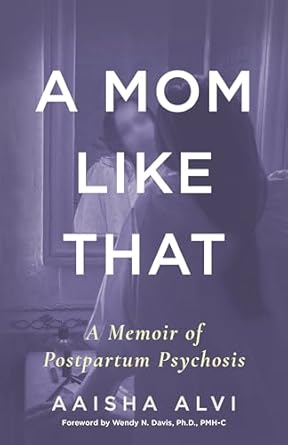
Aaisha Alvi’s book A Mom Like That: A Memoir of Postpartum Psychosis is a mixture of Aaisha’s personal experiences with postpartum psychosis (PP) and general information about PP.
What is psychosis?
Psychosis occurs in 0.1-0.2% of births (this works out to one to two in 1,000).[i] This means it isn’t common, but it does happen, so we need to be aware of it. There’s also very effective treatment for it, so if you or someone you know are experiencing symptoms of PP, please go the ER or call an emergency line immediately so you can receive help (988 is the suicide hotline; 1-833-852-6262 (1-833-TLC-Mama) is the maternal mental health hotline; you can also text HOME to 741741 for the National Crisis text line).
Postpartum Support International says this about PP:
“Symptoms of perinatal psychosis can include:
- Delusions or strange beliefs
- Hallucinations (seeing or hearing things that aren’t there)
- Feeling very agitated
- Hyperactivity or having more energy than usual
- Severe depression or lack of emotion
- Decreased need for or inability to sleep
- Paranoia and suspiciousness
- Rapid mood swings
- Difficulty communicating at times
Immediate treatment for a person going through psychosis is imperative. Individuals experiencing PP are at higher risk of harming themselves or others (including their infant); however, it should be noted that the vast majority do not. This is because the individual experiencing psychosis is experiencing a break from reality. In their psychotic state, the delusions and beliefs make sense to them; delusions feel very real and are often religious. Immediate treatment for someone going through psychosis is imperative.”
As with all perinatal mood and anxiety disorders (PMADs), PP can occur during pregnancy, postpartum, and after miscarriage, stillbirth, or abortion.
Highlights:
Aaisha’s book is noteworthy for two reasons:
- Her honesty in sharing her story gives readers a better understanding of PP. It’s easy to list hallucinations, delusions, and hearing voices as symptoms of PP, but much harder to know what that actually looks like in real life. Her experience also demonstrates the difficulties some mothers face in getting PP diagnosed and properly treated, as well as how hard it can be for the mom herself and those around her to know what’s going on.
- The afterword dispels ten myths about PP. I highly recommend at least reading the afterword if you can get your hands on this book. I’ll highlight two of the myths here:
- Sometimes it’s said that if a mom thinks she’s insane or is scared and upset by her thoughts, then it can’t be PP. The key determiner of psychosis is symptoms like hallucinations and delusions, not how the mom feels about them. If you don’t know if something is an intrusive thought or something else—be it hallucinations, delusions, voices, thoughts of harm to yourself or your child, or anything else—please seek help as soon as possible. And, because some moms with PP aren’t upset by their thoughts, it’s vital that she not be the only person who knows the symptoms.
- PP and hospitalization for PMADs are often thought of as the worst-case-scenario. Aaisha reminds readers that instead, what’s worse is suffering and not getting help. The same goes for medications given for psychosis: some of the side effects may be unwanted, but they are better than the risks of psychosis, and for most moms, are what make PP temporary.
Finally, another important point Aaisha and Wendy Davis, who wrote the forward, make regards how we talk about PP and how that affects mothers. With greater awareness of PMADs, it seems the stigma surrounding them is decreasing. However, because PP is less common and further removed from most of our experiences, it’s much more stigmatized and that makes it harder for moms to speak up about it, whether to get help or to share their story. Sensationalized news stories can contribute to this, but so can comments such as “You’re not that kind of mom” or “PP is so rare it could never happen to me.”
The reality is that it can happen to any new mom, but the other reality we can’t forget is that there is effective treatment for PP.
Other Resources:
Who this book is for:
Anyone who wants to understand more about PP, especially those who have had it in the past or are close with those who are currently experiencing or at risk for PP. However, I’d caution against moms reading anything but the afterword while pregnant or very early postpartum, unless you’ve had PP symptoms in the past and are trying to prepare for the future, or are trying to sort out whether you’re experiencing PP or not. Awareness is good, but I know from personal experience that there are seasons where diving too deep into a topic related to PMADs does more harm than good.
Theological perspective:
Aaisha is a Muslim, and her faith comes up occasionally, mostly with reference to praying or reading/listening to the Qur’an. As is often the case with PP—even for those who are not religious—the hallucinations and voices contained religious content.
[i] Cowan, When Postpartum Packs a Punch, 115, 122–23. Of the one in 1,000 women with postpartum psychosis, the suicide rate is 5% and the infanticide rate 4% (which would be one or fewer in 10,000 mothers). This should be encouraging to those with psychosis: horror stories about psychosis may make the news, but that doesn’t have to happen when it’s treated.
 The Sorrows of Eve